VX Resources Canada
Superfine Vermiculite – 4 cu. ft.
Superfine Vermiculite – 4 cu. ft.
Couldn't load pickup availability
Premium exfoliated superfine vermiculite processed and packed by VX Resources Canada in Gananoque, Ontario.
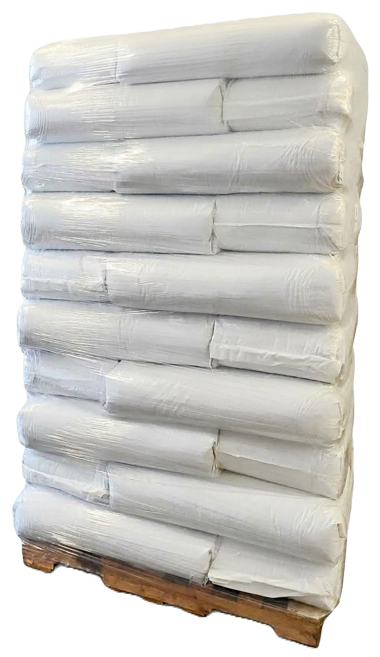
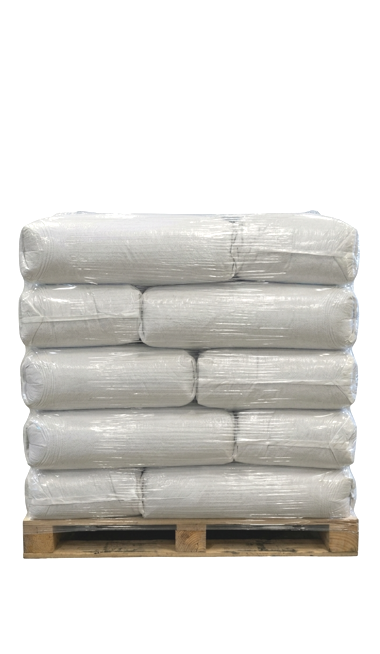
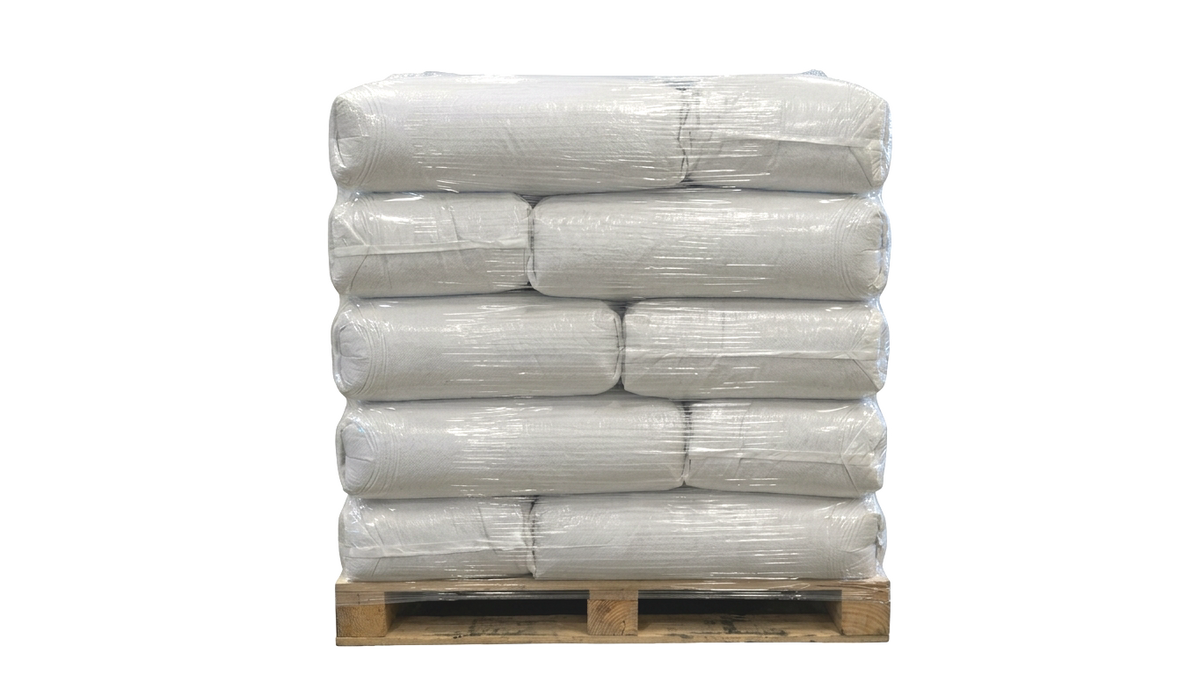
Available as an individual 4 cu. ft. bag, a 15-bag skid (60 cu. ft. total), or a 30-bag full pallet (120 cu. ft. total).
Individual parcel orders are limited to a maximum of 2 bags. Commercial freight applies to skid and pallet quantities.
Technical information
Technical information
Exfoliated vermiculite combines low bulk density with a highly porous, layered structure, providing a distinctive combination of thermal, absorptive and mineral properties for horticultural, industrial, construction and other commercial applications.
The technical properties of vermiculite vary according to mineral source, particle-size grade and processing conditions. The information below provides representative industry data for exfoliated vermiculite and should not be interpreted as a product-specific specification for every VX Resources grade or production batch.
Typical Physical Properties of Exfoliated Vermiculite
| Property | Typical Industry Data |
|---|---|
| Appearance | Lightweight, accordion-shaped granules |
| Colour | Light to dark brown; colour varies by mineral source |
| Loose bulk density | Approximately 64–160 kg/m³ (4–10 lb/ft³), depending on grade and source |
| pH in water | Approximately 6–9 |
| Mohs hardness | Approximately 1–2 |
| Combustibility | Non-combustible |
| Moisture loss at 110°C | Approximately 4–10% |
| Specific heat | Approximately 0.84–1.08 kJ/kg·K |
| Cation exchange capacity | Approximately 50–100 me/100 g |
| Water-holding capacity | Approximately 220–325% by weight; 20–50% by volume |
| Sintering temperature | Approximately 1,150–1,250°C |
| Fusion temperature | Approximately 1,200–1,320°C |
These values are representative industry data. Actual characteristics can vary with mineral source, particle size, exfoliation and production conditions.
Loose Bulk Density
Loose bulk density (LBD) describes the mass of loose exfoliated vermiculite occupying a given volume and is commonly expressed in kilograms per cubic metre (kg/m³).
LBD is an important characteristic in many applications, but it is not a single fixed property of vermiculite. It varies according to mineral source, particle-size grade, expansion achieved during exfoliation and production conditions.
Coarser, highly expanded material will generally exhibit a lower loose bulk density than finer grades or material exhibiting lower expansion.
For applications requiring a defined LBD range, customers should confirm the applicable product specification with VX Resources.
Thermal Conductivity
The expanded structure of exfoliated vermiculite provides low thermal conductivity. Thermal conductivity is affected by factors including bulk density, particle size, temperature and installation conditions.
Representative industry data for exfoliated vermiculite includes:
| Loose Bulk Density | Typical Thermal Conductivity |
|---|---|
| 56–64 kg/m³ | approximately 0.058 W/m·K |
| 80–96 kg/m³ | approximately 0.064 W/m·K |
| 160–192 kg/m³ | approximately 0.071 W/m·K |
These values illustrate why thermal conductivity should not be represented as a single universal value for all vermiculite grades and densities.
High-Temperature Characteristics
Exfoliated vermiculite is an inorganic, non-combustible mineral material and is widely used as a component in thermal-insulation, refractory and fire-protection formulations.
Representative industry data indicates a sintering range of approximately 1,150–1,250°C and a fusion range of approximately 1,200–1,320°C.
The suitability and performance of a finished construction, refractory or fire-protection system depend on the complete formulation, design and applicable testing or certification. These values should therefore not be interpreted as a fire rating or certification for a finished product or system.
Water Holding & Absorption
The porous, layered structure created during exfoliation allows vermiculite to retain substantial quantities of water and other liquids.
Representative industry data indicates water-holding capacity of approximately 220–325% by weight and approximately 20–50% by volume, depending on particle size and material characteristics.
Liquid absorption can vary significantly according to grade, mineral source, liquid type and test method. Finer grades generally provide greater specific surface area than coarser grades, which can influence liquid-retention and absorption characteristics.
Where absorption performance is critical to an application, product-specific testing should be used rather than relying solely on general industry values.
Cation Exchange Capacity
Vermiculite possesses cation-exchange properties that allow positively charged ions to be held within or exchanged through the mineral structure.
Representative industry data for exfoliated vermiculite indicates a cation exchange capacity of approximately 50–100 me/100 g.
This property contributes to vermiculite's usefulness in horticultural growing media and other applications where nutrient retention and exchange characteristics are beneficial.
Typical Chemical Composition
Vermiculite is a naturally occurring hydrated magnesium-aluminium silicate mineral. Its precise chemical composition varies according to geological source.
Representative industry ranges include:
| Component | Typical Range by Weight |
|---|---|
| Silicon dioxide (SiO₂) | 38–46% |
| Aluminium oxide (Al₂O₃) | 10–16% |
| Magnesium oxide (MgO) | 16–35% |
| Calcium oxide (CaO) | 1–5% |
| Potassium oxide (K₂O) | 1–6% |
| Iron oxide (Fe₂O₃) | 6–13% |
| Titanium dioxide (TiO₂) | 1–3% |
| Water (H₂O) | 8–16% |
| Other components | 0.2–1.2% |
These figures represent broad industry data and are not a certificate of analysis for VX Resources material.
Because vermiculite is naturally occurring, chemical composition varies between geological deposits and may also vary between samples. Where chemical composition is material to an application, source-specific or batch-specific technical documentation should be consulted.
Mineral Source & Natural Variation
Natural variation is an inherent characteristic of mineral products.
Differences may occur in colour, particle shape, expansion characteristics, loose bulk density, particle-size distribution and chemical composition according to geological source and processing conditions.
VX Resources sources crude vermiculite from established mineral suppliers and processes the material at our facility in Gananoque, Ontario.
Where an application requires defined physical, chemical or performance characteristics, customers should contact VX Resources to confirm the appropriate grade and applicable technical documentation before specifying the material.
Product-Specific Technical Data
General industry data is useful for understanding the characteristics of vermiculite, but it should not replace product-specific technical information where defined performance is required.
VX Resources technical documentation may include, as applicable:
- particle-size distribution
- loose bulk density
- product appearance
- packaging information
- chemical or mineral information
- safety documentation
- application-specific technical information
Technical Data Sheets (TDS), Safety Data Sheets (SDS) and other supporting documentation will be made available through the VX Resources Technical Resources section as applicable.
Technical Documents & SDS
Technical Documents & SDS
Access technical documentation for VX Resources exfoliated vermiculite products, including Technical Data Sheets, Safety Data Sheets and supporting product information.
VX Resources processes and supplies exfoliated vermiculite from our facility in Gananoque, Ontario. Technical documentation is provided to assist customers with product selection, specification and application requirements.
Technical Data Sheets
Technical Data Sheets provide product-specific information such as particle-size grade, typical physical characteristics, packaging and other relevant technical information.
Superfine Vermiculite – Technical Data Sheet
Available upon request
Fine Vermiculite – Technical Data Sheet
Available upon request
Medium Vermiculite – Technical Data Sheet
Available upon request
Technical documentation for Large/Coarse, Micron and application-specific products may be provided on request.
Safety Data Sheets
Safety Data Sheets provide information relating to product identification, handling, storage and other applicable safety information.
Exfoliated Vermiculite – Safety Data Sheet (SDS)
Available upon request
Source & Batch-Specific Documentation
Vermiculite is a naturally occurring mineral and physical and chemical characteristics can vary according to geological source and production conditions.
Where an application requires defined particle-size distribution, loose bulk density, chemical composition or other technical characteristics, please contact VX Resources to confirm the documentation applicable to the material being supplied.
Need Technical Information?
For technical documentation, product selection assistance or application-specific requirements, contact VX Resources.
Please include the intended application, required grade or particle size, approximate quantity and any technical specification that must be met.
Share